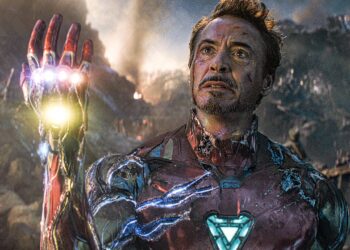


Some of the most memorable movie villains have a point. Killmonger in Black Panther, Thanos in Avengers: Infinity War, Magneto in X-Men and the Riddler in The Batman all start from a real problem, such as inequality, scarcity, persecution or corruption. Their methods are what make them villains.
This list looks at 13 films where the villain’s argument holds up better than the heroes would like. Spoilers follow for every film.
Villains who were right (at least partly)
| Villain | Film (year) | What they got right | Where they went wrong |
|---|---|---|---|
| Erik Killmonger | Black Panther (2018) | Wakanda hid its wealth while the world suffered | Planned armed global revolt |
| Thanos | Avengers: Infinity War (2018) | Resources are finite | Killed half of all life |
| Magneto | X-Men (2000) | Humans will persecute mutants | Willing to sacrifice innocents |
| Ozymandias | Watchmen (2009) | Nuclear war had to be stopped | Murdered millions to stop it |
| Captain Doyle | Gone Baby Gone (2007) | The child was safer away from her mother | Kidnapping and lying |
| The Riddler | The Batman (2022) | Gotham’s elite were corrupt | Serial murder and terror |
| Roy Batty | Blade Runner (1982) | Replicants deserve a life | Killed to get it |
1. Erik Killmonger, Black Panther (2018)

Killmonger, played by Michael B. Jordan, grows up in Oakland after his Wakandan father is killed by his own brother, King T’Chaka. His charge against Wakanda is simple: it sat on vast wealth and technology while people of African descent around the world were enslaved, colonised and policed.
 Also readJalsa Review: Vidya Balan and Shefali Shah Gives Excellent Performance
His solution, arming uprisings worldwide, is where he loses the argument. But the film agrees with his diagnosis. T’Challa ends it by opening Wakanda to the world and starting an outreach centre in the same Oakland neighbourhood where Killmonger grew up.
2. Thanos, Avengers: Infinity War (2018)
Thanos watched his home world, Titan, collapse after it ignored his warnings about overpopulation. He concludes that the universe’s resources cannot support unlimited growth and that someone has to act.
The premise is not absurd; resource limits are a real debate. The flaw is the logic. With the Infinity Gauntlet he could have doubled the universe’s resources, and random mass killing does nothing to stop populations growing back. He is right about the problem and badly wrong about the answer.
3. Magneto, X-Men (2000)
Magneto, a Holocaust survivor, has already seen what happens when a government registers a minority. When the US Senate debates a Mutant Registration Act, he assumes the worst. The X-Men series keeps proving him right, with mutant hunts, cures forced on people and Sentinels built to kill.
His plan in the first film, turning world leaders into mutants against their will, would likely have killed them. Charles Xavier believes in co-existence, but Magneto’s fears are grounded in history.
4. Ozymandias, Watchmen (2009)
Adrian Veidt sees the US and the Soviet Union heading for nuclear war. He frames Doctor Manhattan for a series of devastating attacks on world cities, which forces the superpowers to unite against a common threat.
It works, and that is what makes him so disturbing. Rorschach is killed for refusing to keep the secret, and only his journal leaves the peace in doubt. Zack Snyder’s film changes the comic’s giant squid to Manhattan’s energy, but the moral question is the same: are millions of deaths worth saving billions?
5. Captain Doyle, Gone Baby Gone (2007)

Ben Affleck’s adaptation of Dennis Lehane’s novel follows a private detective searching for a missing four-year-old in Boston. The twist is that police captain Jack Doyle, played by Morgan Freeman, arranged the kidnapping because the girl’s mother was neglectful and involved with drug dealers.
The detective returns her anyway because the law demands it. The final scene, with the mother leaving her daughter alone in front of the TV, makes a strong case that Doyle was right.
6. Tyler Durden, Fight Club (1999)

Brad Pitt’s Tyler Durden is a reaction to a life of IKEA catalogues, office jobs and debt. His critique of consumer culture has aged well, and many viewers still quote it.
Where he goes wrong is Project Mayhem, which turns into a cult that bombs buildings. The film is careful to show that Tyler is not a role model, but his starting point is not far off.
7. The Director, The Cabin in the Woods (2012)

The technicians running the cabin look like sadists placing bets on how a group of students will die. The ending reveals why: the ritual sacrifice keeps ancient gods asleep and stops them from destroying humanity.
When the survivors, Dana and Marty, refuse to complete the ritual, the world ends. The Director, played by Sigourney Weaver, was doing a terrible job for a reason that turned out to be true.
8. Ra’s al Ghul, Batman Begins (2005)

Ra’s al Ghul and the League of Shadows believe Gotham is beyond saving. The city’s courts, police and politicians are owned by the mob, and he is not wrong about that.
His plan, spreading a fear toxin that would make the city destroy itself, would kill millions of innocent people. Bruce Wayne shares his diagnosis but not his cure.
9. Orm, Aquaman (2018)

Orm, the Ocean Master, wants to declare war on the surface world. His reason is the pollution, overfishing and waste humans dump into the oceans every day.
His own plan is a war that would kill millions, and he stages a submarine attack to justify it. Still, director James Wan gives Orm a real environmental case that the film never fully answers.
10. Roy Batty, Blade Runner (1982)

Roy Batty and his fellow Nexus-6 replicants were built as slave labour with a four-year lifespan. All they want is more time. Batty does kill, including his maker, Eldon Tyrell, when Tyrell tells him nothing can be done.
In his last moments, he saves the life of Deckard, the man hunting him, and delivers the “tears in rain” speech. The film leaves little doubt that his demand to live was fair.
11. The Riddler, The Batman (2022)

Paul Dano’s Riddler targets Gotham’s mayor, police commissioner and district attorney and exposes how the city’s renewal fund was looted by the people meant to protect it. Every target turns out to be corrupt.
His methods, livestreamed murders and a plan to flood the city, are monstrous. But his evidence holds up, and the film ends with Batman rethinking what Gotham actually needs from him.
12. The Wicked Witch of the West, The Wizard of Oz (1939)

Look at the film from the Witch’s side. A stranger arrives, drops a house on her sister and walks off with her family’s ruby slippers. She wants them back.
Gregory Maguire’s novel Wicked and the stage musical built a whole story around this view. The two-part film adaptation, Wicked (2024) and Wicked: For Good (2025), brought it to a new global audience.
13. Vulture, Spider-Man: Homecoming (2017)
Adrian Toomes, played by Michael Keaton, runs a salvage crew hired to clear up after the Battle of New York. A new government agency backed by Tony Stark takes the job away, and his workers are left with nothing.
His complaint about rich and powerful people taking care of each other at the expense of ordinary workers is fair. Turning to selling alien weapons to criminals is not. Marvel used the same approach again with Namor in Black Panther: Wakanda Forever (2022), who is protecting his people from nations hunting for vibranium.
Why “right” villains work
A villain with a fair point forces the hero, and the audience, to defend their side. That is harder to write than pure evil, but it gives films a longer life in fan debates. Most of the villains above lose because of their methods, not because their reasons were wrong.
For more on great antagonists, see our list of the most successful movie villains. Comic fans may also like the best DC comic books of all time and our ranking of Spider-Man movies.
Frequently asked questions
Was Killmonger right in Black Panther?
Partly. The film agrees that Wakanda was wrong to hide its wealth while the world suffered, and T’Challa changes course at the end. Killmonger’s plan to arm uprisings worldwide is what the film rejects.
Was Thanos right?
He was right that resources are limited, but his solution makes no sense. Populations would grow back, and he could have used the Infinity Stones to create more resources instead.
Why is the villain in The Cabin in the Woods right?
The ritual killings keep ancient gods from waking and destroying humanity. When the survivors refuse to finish it, the world ends.
Is Magneto a villain or a hero?
He is usually written as an antagonist, but his fear of persecution is grounded in his past as a Holocaust survivor, and the X-Men films often prove his warnings correct.