
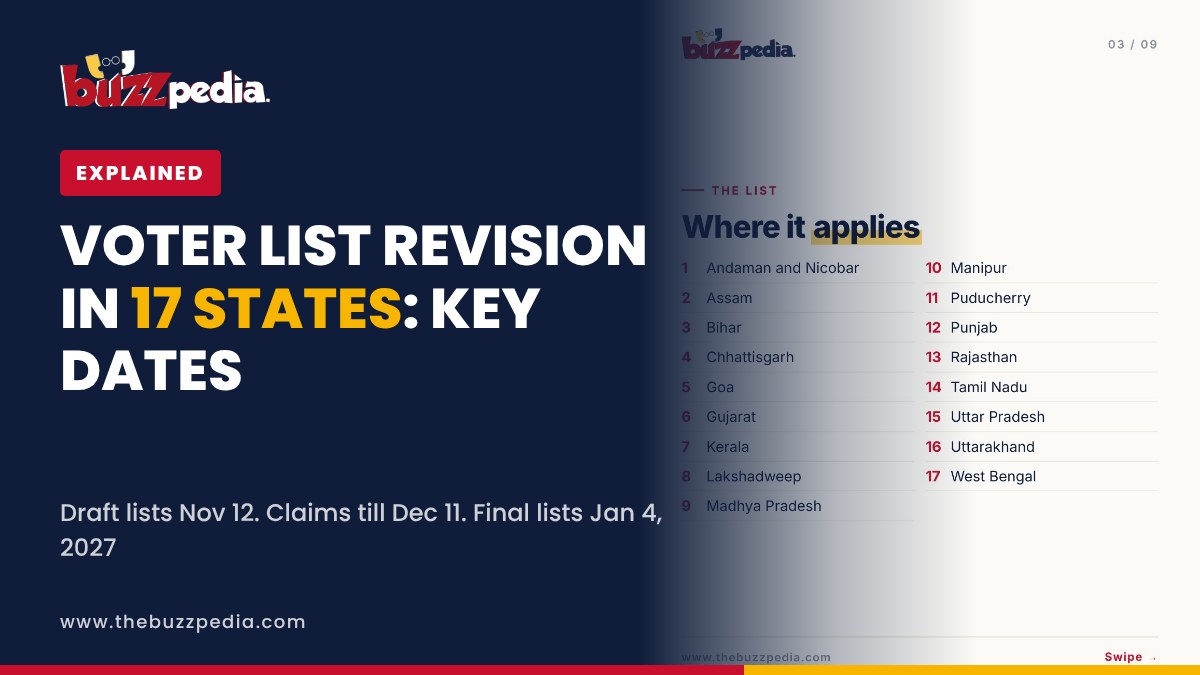
The Election Commission of India has directed 17 states and Union Territories to carry out a Special Summary Revision (SSR) of electoral rolls, with January 1, 2027 as the qualifying date. Draft voter lists will be published on November 12, and voters will have until December 11 to file claims and objections.
The announcement comes amid protests and a legal challenge over the separate Special Intensive Revision (SIR) exercise. Here is what the SSR means for voters.
Which states and UTs are covered
- Andaman and Nicobar Islands
- Assam
- Bihar
- Chhattisgarh
- Goa
- Gujarat
- Kerala
- Lakshadweep
- Madhya Pradesh
- Manipur
- Puducherry
- Punjab
- Rajasthan
- Tamil Nadu
- Uttar Pradesh
- Uttarakhand
- West Bengal
SSR schedule: key dates
| Stage | Date |
|---|---|
| Rationalisation of polling stations | By November 2, 2026 |
| Draft electoral rolls published | November 12, 2026 |
| Claims and objections | November 12 to December 11, 2026 |
| Disposal of claims and objections | By December 28, 2026 |
| Final electoral rolls published | January 4, 2027 |
SSR vs SIR: what is the difference
Special Summary Revision (SSR) is a regular update of the existing voter list. A draft list is published and voters file claims to add, correct or remove names.
 Also readAnkita Bhandari Case Explained: Why Her Parents Are Protesting at India Gate Against Sikkim Governor Appointment
Special Intensive Revision (SIR) is a fresh, house-to-house verification of the entire voter list. SIR is the exercise at the centre of the current political row and is under challenge in the Supreme Court.
Which form should you use
- Form 6: to enrol as a new voter. You can apply if you turn 18 on or before January 1, 2027.
- Form 8: to correct your details or shift your address.
- Form 7: to object to an entry or seek deletion of a name.
How to check your name
- Search on the Election Commission’s voter portal, voters.eci.gov.in
- Use the Voter Helpline app
- Contact your Booth Level Officer (BLO)
Check the draft list between November 12 and December 11 so there is time to file a claim if your name is missing or your details are wrong.
States not in this list
Regions where SIR is underway or was recently completed, including Delhi, Maharashtra, Karnataka, Haryana, Odisha and Telangana, are not part of this schedule. The Election Commission has said separate schedules will be notified for them later. Himachal Pradesh, Jammu and Kashmir, and Ladakh will also get separate schedules.
Why now
Five of the 17 states, Uttar Pradesh, Punjab, Uttarakhand, Goa and Manipur, have Assembly terms ending between March and May 2027. The Commission cited the Representation of the People Act, 1950, which allows polls to be held up to six months before a term ends. The revision is also meant to enrol young and first-time voters.
Frequently asked questions
What is a Special Summary Revision (SSR)?
It is a regular update of the voter list. A draft list is published, and voters can file claims and objections to add, correct or remove names before the final list is published.
How is SSR different from SIR?
SIR, or Special Intensive Revision, is a fresh house-to-house verification of the entire voter list. SSR is a claims-based update of the existing list.
Which states and UTs are covered?
Andaman and Nicobar Islands, Assam, Bihar, Chhattisgarh, Goa, Gujarat, Kerala, Lakshadweep, Madhya Pradesh, Manipur, Puducherry, Punjab, Rajasthan, Tamil Nadu, Uttar Pradesh, Uttarakhand and West Bengal.
What is the last date to file a claim?
Claims and objections can be filed from November 12 to December 11, 2026.
When will the final voter list be published?
The final electoral rolls will be published on January 4, 2027.
I turn 18 in December 2026. Can I enrol?
Yes. Anyone who turns 18 on or before January 1, 2027 can apply using Form 6.
Sources: PTI, Oneindia, Daily Jagran, India TV.