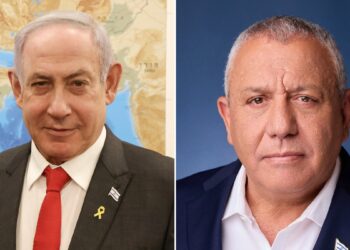

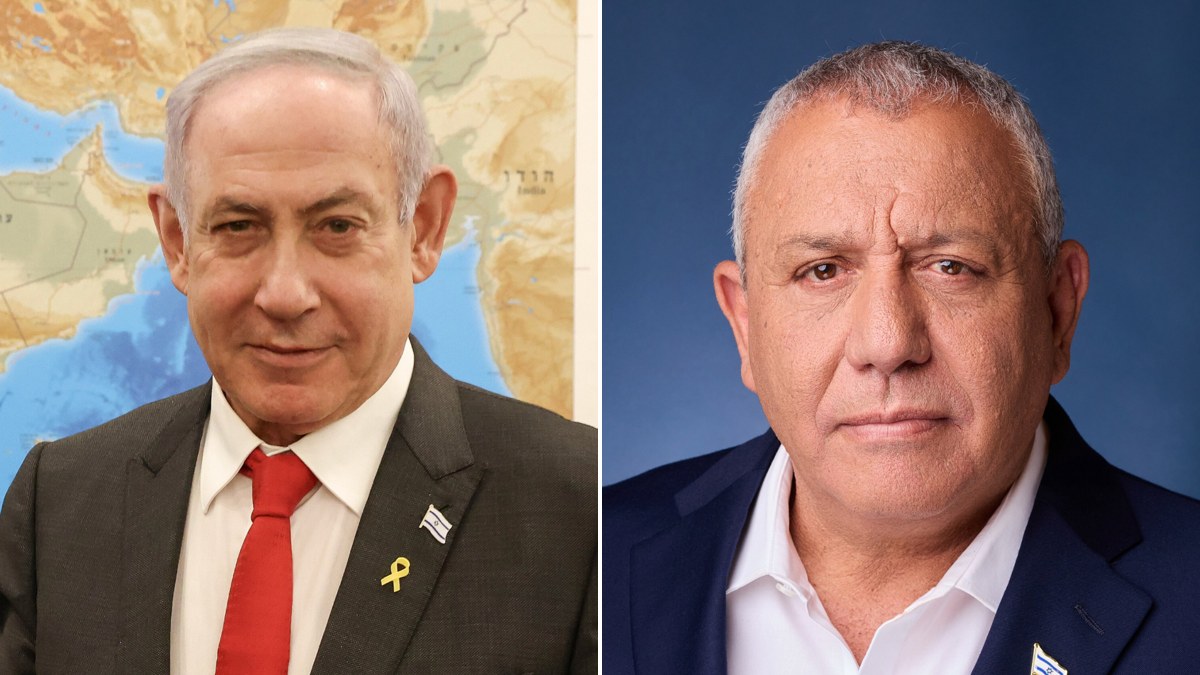
Benjamin Netanyahu’s bloc won more seats in Israel’s 27 October election. But his rival, former army chief Gadi Eisenkot, now has the backing of most MPs to become the next prime minister, thanks in part to two Arab-led parties.
Here is how the numbers changed after the exit polls, and what happens next.
The final result
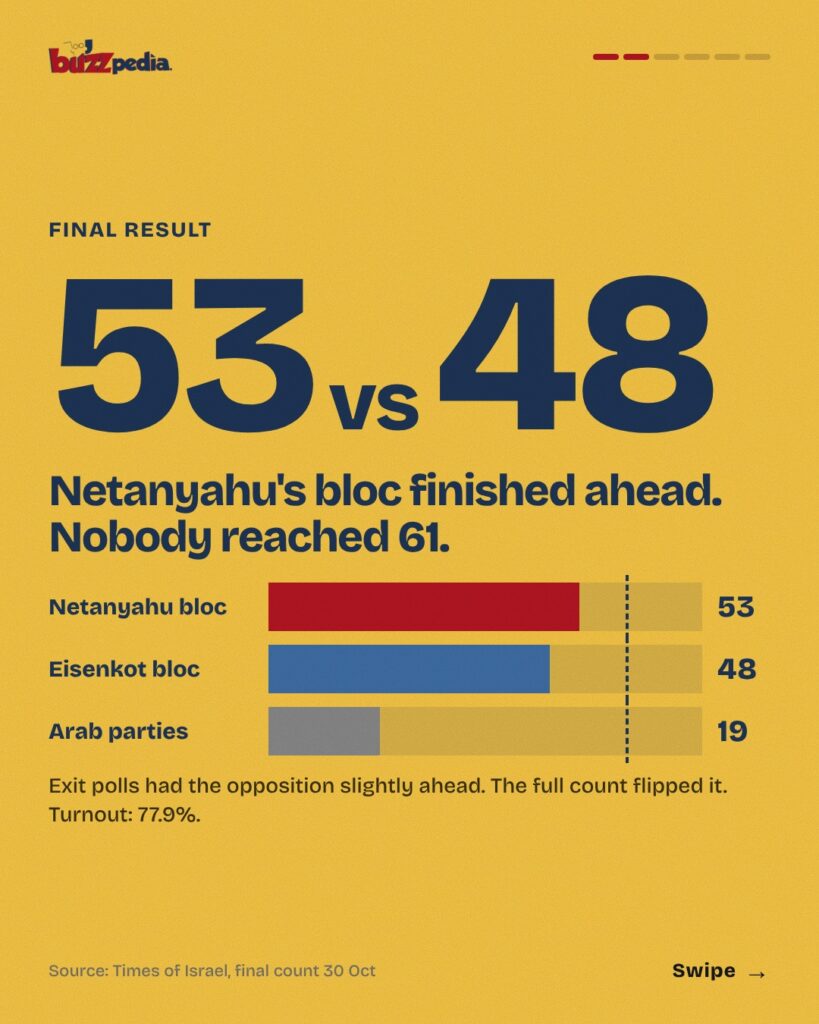
With all votes counted, the Times of Israel reported these final figures:
 Also readRamayana Advance Booking Crosses Rs 100 Crore Worldwide
- Netanyahu bloc: 53 seats (Likud 27, Otzma Yehudit 7, United Torah Judaism 7, Shas 6, Religious Zionism 6)
- Eisenkot bloc: 48 seats (Yashar 21, B’Yachad 12, the Democrats 8, Yisrael Beytenu 7)
- Arab-led parties: a record 19 seats (Joint List 11, Ra’am 8)
Turnout was 77.9%. Exit polls on election night had put the opposition slightly ahead. The full count reversed that, but neither bloc reached the 61 seats needed for a majority in the 120-seat Knesset. The election committee found no irregularities, and President Isaac Herzog accepted the results on 4 November.
Why Eisenkot is now ahead
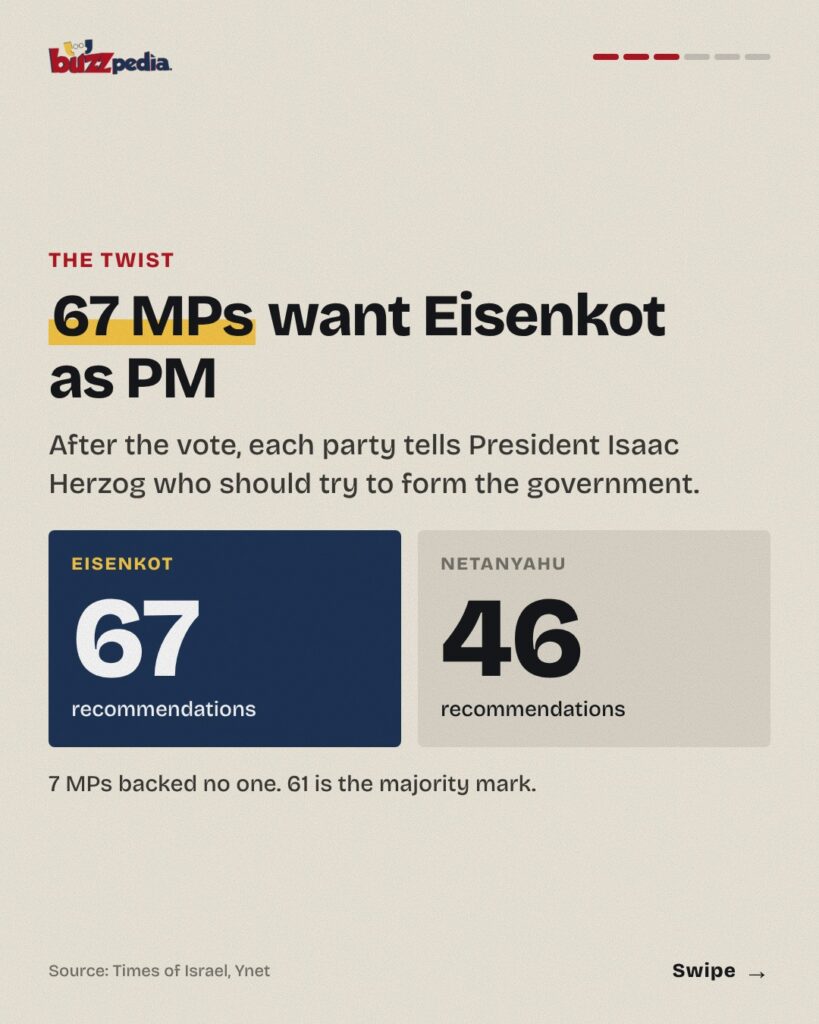
After an election, each party tells the President who it wants as prime minister. According to the Times of Israel and Jerusalem Post:
- Eisenkot: 67 recommendations from Yashar, Naftali Bennett’s B’Yachad, the Democrats, Avigdor Liberman’s Yisrael Beytenu, and the Arab-led Ra’am and Joint List.
- Netanyahu: 46 recommendations from Likud, Shas, Religious Zionism and Otzma Yehudit.
- No one: 7. United Torah Judaism declined to back anyone, after a split with Netanyahu over the failure to pass a law exempting ultra-Orthodox men from army service.
Recommending someone as PM is not the same as joining his government. Eisenkot would still need to build a coalition, and relying on Arab-led parties has been politically sensitive in Israel. The only precedent is 2021, when Ra’am joined the government led by Naftali Bennett and Yair Lapid.
Netanyahu and his allies have claimed the election was “stolen”, without evidence, according to Al Jazeera.
What happens next
- 8 November: Herzog announces who gets the first chance to form a government.
- 28 days: that leader has 28 days to build a coalition of 61, with up to 14 more if needed.
- If that fails: Herzog can pick another MP, or 61 MPs can jointly nominate someone. If all attempts fail, Israel goes to a fresh election.
Until a new government is sworn in, Netanyahu remains caretaker prime minister.
Read our earlier report: Israel Election 2026: Exit Polls Show No Clear Winner.
FAQs
Who won the Israel election 2026?
No bloc won a majority. Netanyahu’s bloc won 53 seats and Eisenkot’s 48, with Arab-led parties at 19. Neither reached 61.
Why could Eisenkot become PM with fewer seats?
Because 67 MPs, including the Arab-led Ra’am and Joint List, recommended him to the President as prime minister, compared with 46 for Netanyahu.
When will Israel’s next PM be decided?
President Herzog names a candidate on 8 November. That person then has up to 42 days to form a government.
Is Netanyahu still prime minister?
Yes, as caretaker prime minister until a new government is sworn in.
Sources: Times of Israel, Jerusalem Post, Al Jazeera, Reuters.