
The best places to visit in New Zealand are Waitomo Glowworm Caves, Tongariro National Park, Rotorua, Auckland, Queenstown, Kaikoura, Milford Sound, Christchurch, Piha and Wanaka. The North Island gives you caves, volcanoes and Māori culture, while the South Island is about lakes, fiords and adventure sports. Plan at least 10 to 14 days to see both.
Indian travellers need a visitor visa for New Zealand, applied for online through Immigration New Zealand, and also pay the International Visitor Conservation and Tourism Levy of NZ$100. Check the official fee tool for the current visa charge before you apply. Below is our updated guide for 2026.
Best places to visit in New Zealand: quick facts
| Place | Island | Best for |
|---|---|---|
| Waitomo Glowworm Caves | North | Glowworm boat rides |
| Tongariro National Park | North | Alpine Crossing hike |
| Rotorua | North | Geysers, Māori culture |
| Auckland | North | City, harbour, islands |
| Piha | North | Black-sand beach, surfing |
| Queenstown | South | Bungy, skiing, lake views |
| Wanaka | South | Roys Peak, lakes |
| Milford Sound | South | Fiord cruises |
| Kaikoura | South | Whale watching |
| Christchurch | South | Gardens, rebuilt city centre |
1. Waitomo Glowworm Caves
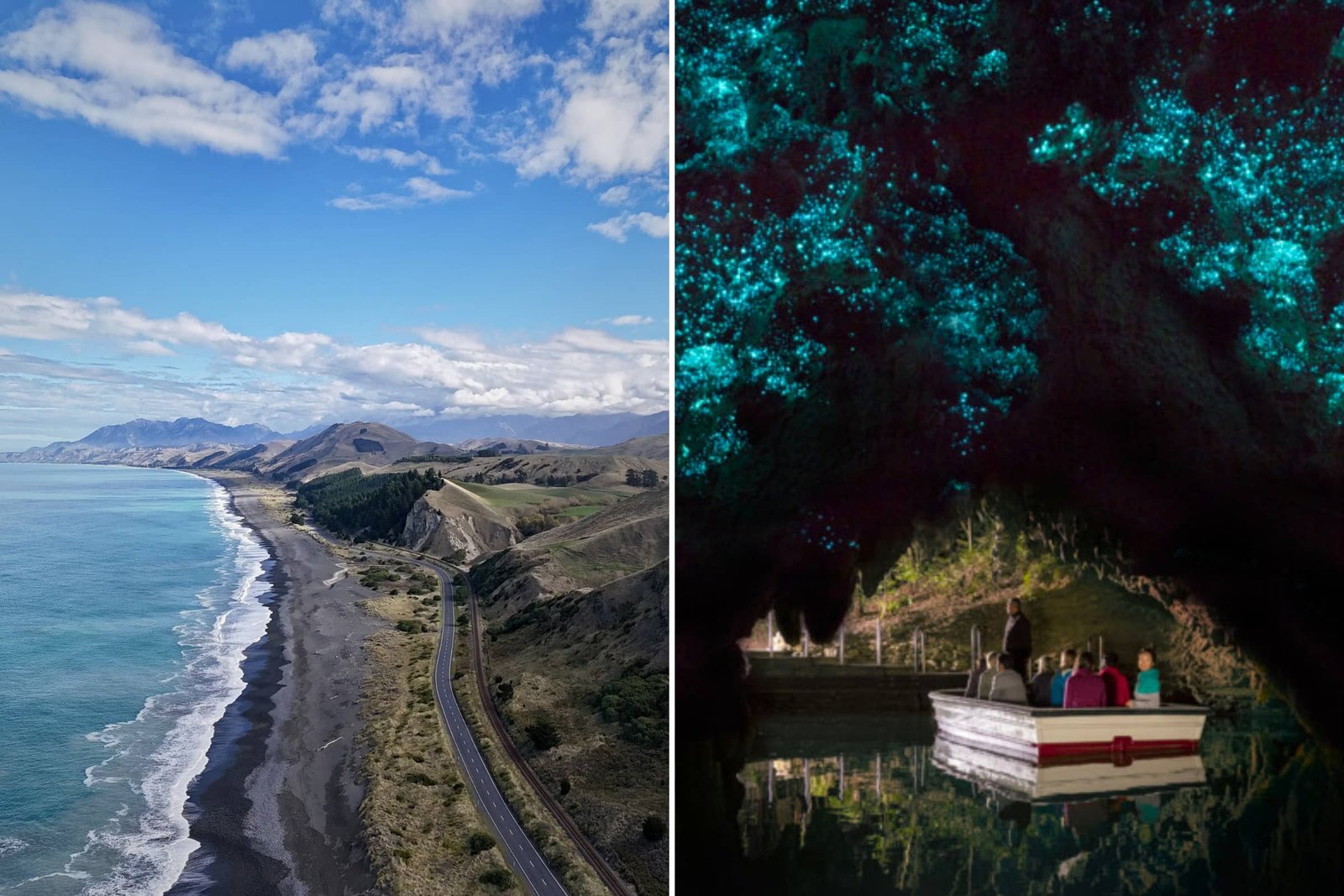
Waitomo, in the King Country region of the North Island, is famous for caves lit by thousands of glowworms. The classic tour ends with a quiet boat ride through the Glowworm Grotto, where the ceiling looks like a starry sky.
 Also read5 Hill Stations Near Chennai for a Peaceful Weekend in 2026
For something more active, nearby operators run black-water rafting, where you float through caves on a tube. Photography is not allowed inside the main grotto.
2. Tongariro National Park
Tongariro is New Zealand’s oldest national park, set up in 1887, and is a UNESCO World Heritage Site for both its nature and its Māori cultural value. It has three active volcanoes: Ruapehu, Ngauruhoe and Tongariro.
The Tongariro Alpine Crossing, about 19 km long, is often called the best one-day hike in the country and usually takes six to eight hours. Weather changes fast, so check conditions and book a shuttle in advance.
3. Rotorua
Rotorua sits on an active geothermal field, so expect bubbling mud pools, hot springs and a sulphur smell in the air. At Te Puia, in the Whakarewarewa valley, you can see the Pōhutu geyser and learn about Māori arts and carving.
Other stops include Waimangu Volcanic Valley and a traditional hāngī meal at a cultural evening. Lake Taupō is about an hour’s drive south.
4. Auckland
Auckland is the country’s largest city and the main arrival point for most international flights. It is called the City of Sails because so many residents own boats.
Go up the Sky Tower, take a ferry to Rangitoto Island or Waiheke Island, and visit Auckland Zoo. The city also has a large Indian community, so Indian food is easy to find.
5. Queenstown
Queenstown, on Lake Wakatipu, is New Zealand’s adventure capital. The Kawarau Bridge nearby is where AJ Hackett started the world’s first commercial bungy jumping operation in 1988.
Take the Skyline Gondola up Bob’s Peak, hike the Ben Lomond Track, or ride the Queenstown Trail. In winter, Coronet Peak and The Remarkables are popular ski fields. Several Indian films have also been shot in the region.
6. Kaikoura
Kaikoura, on the east coast of the South Island, is one of the best places in the world to see sperm whales close to shore, thanks to a deep underwater canyon. Dolphin swimming and seal spotting are also popular.
The Kaikoura Peninsula Walkway gives views of the sea and the snowy Seaward Kaikoura Range. The town is also known for fresh crayfish.
7. Milford Sound
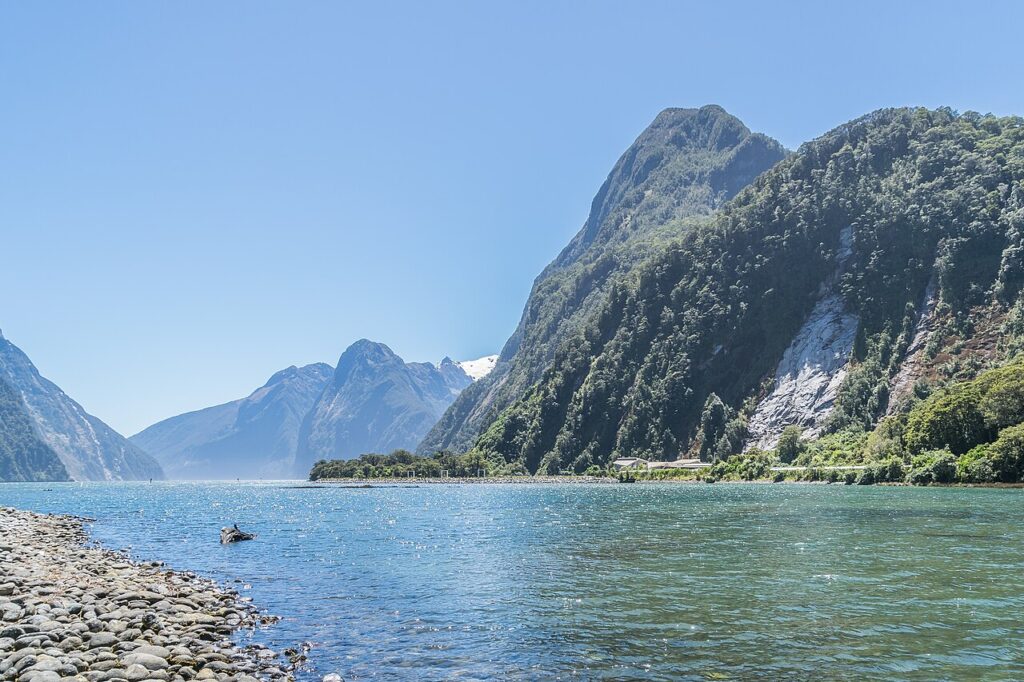
Milford Sound, in Fiordland National Park, is a fiord carved by glaciers, with Mitre Peak rising straight out of the water. Writer Rudyard Kipling is said to have called it the eighth wonder of the world.
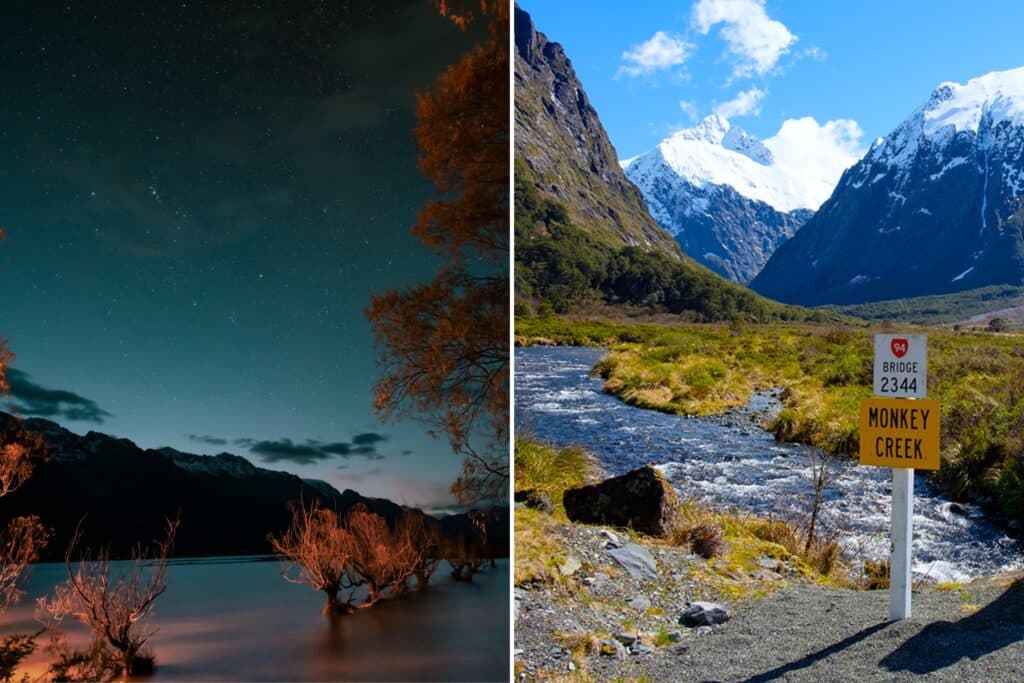
The drive from Te Anau through the Eglinton Valley is part of the experience, with stops like Mirror Lakes and Monkey Creek. A Māori legend says the goddess Hine-nui-te-pō released sandflies here so people would not stay forever, and you will meet plenty of them.
8. Christchurch
Christchurch is the largest city on the South Island. It was badly damaged by the earthquakes of 2010 and 2011, and its city centre has been rebuilt with new public spaces and a mix of old and new buildings.
Visit the Christchurch Botanic Gardens, ride the heritage tram and see native wildlife at Orana Wildlife Park.
9. Piha
Piha is a black-sand beach village about 45 minutes west of Auckland, known for big waves and surfing. Lion Rock sits in the middle of the beach.
Walk to Kitekite Falls or the Tasman Lookout. Swim only between the lifeguard flags, since the currents can be strong.
10. Wanaka
Wanaka is a calmer alternative to Queenstown, set on Lake Wanaka with mountain views all around. The lone willow known as That Wanaka Tree is one of the most photographed trees in the country.
Fit hikers climb Roys Peak for a famous view over the lake. Mount Aspiring National Park is close by.
For more travel and entertainment lists, see our listicles and movies sections.
Frequently asked questions
Do Indians need a visa for New Zealand?
Yes. Indian passport holders need a visitor visa, applied online through Immigration New Zealand, and must also pay the NZ$100 visitor levy.
What is the best time to visit New Zealand?
December to February is summer and best for hiking and beaches. June to August is ideal for skiing in Queenstown and Wanaka.
How many days are enough for New Zealand?
Ten to fourteen days lets you cover both islands at a comfortable pace. With one week, focus on one island.
Is Milford Sound worth visiting?
Yes. It is one of the most scenic spots in the country, and it looks dramatic even on rainy days, when waterfalls appear on the cliffs.
Sources: Immigration New Zealand, visa fees and IVL, Tongariro National Park, Wikipedia, Milford Sound, Wikipedia.