

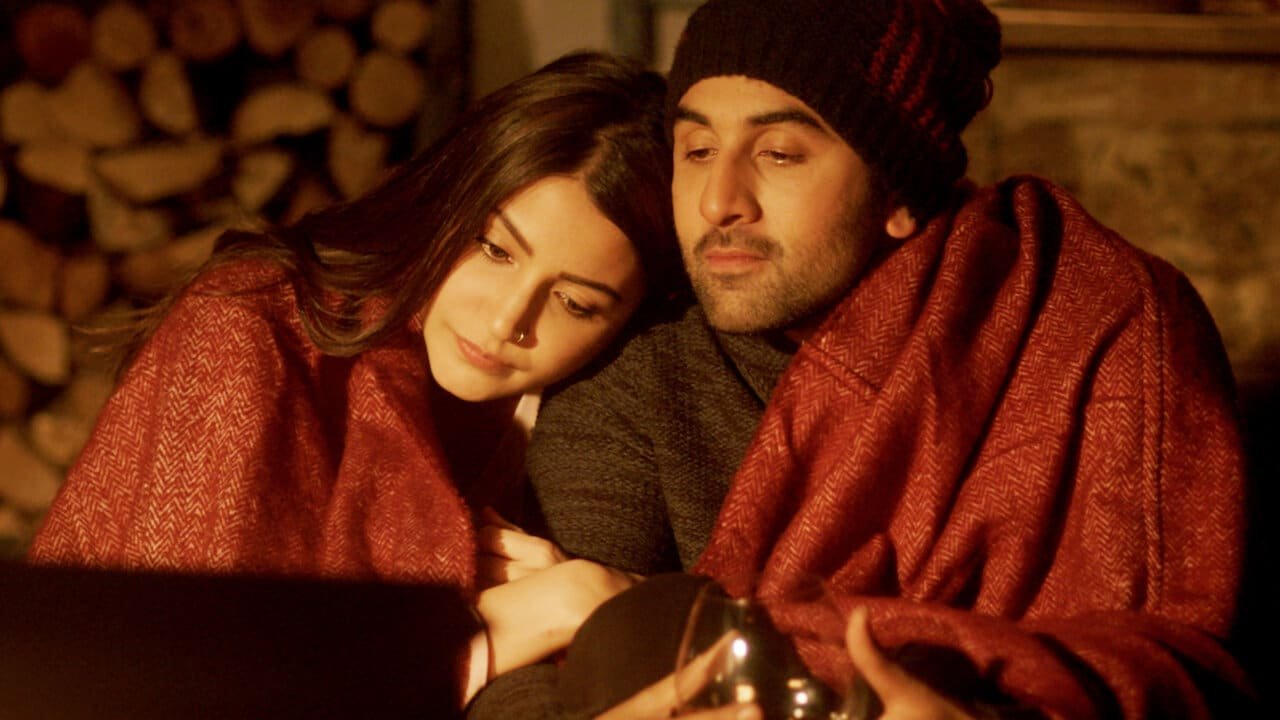
The best Ae Dil Hai Mushkil dialogues include “Ek tarfa pyaar ki taaqat hi kuch aur hoti hai”, “Main kisi ki zaroorat nahi, khwahish banna chahti hoon” and “Pyaar mein junoon hai, par dosti mein sukoon hai.” Karan Johar’s film released on 28 October 2016 and turns ten in October 2026.
Ae Dil Hai Mushkil follows Ayan Sanger (Ranbir Kapoor), who falls for his friend Alizeh Khan (Anushka Sharma) while she is still hung up on her ex, Ali (Fawad Khan). Ayan later gets involved with Saba (Aishwarya Rai Bachchan), an older poet. The film is about one-sided love, and its dialogues are still shared every time someone gets friend-zoned.
Ae Dil Hai Mushkil: quick facts
| Detail | Information |
|---|---|
| Release date | 28 October 2016 (Diwali) |
| Director | Karan Johar |
| Dialogues | Karan Johar, Niranjan Iyengar |
| Cast | Ranbir Kapoor, Anushka Sharma, Aishwarya Rai Bachchan, Fawad Khan |
| Special appearances | Shah Rukh Khan, Alia Bhatt, Lisa Haydon |
| Music and lyrics | Pritam, Amitabh Bhattacharya |
| Worldwide gross | About Rs 237 crore |
10 lovely Ae Dil Hai Mushkil dialogues
We have corrected two items from our earlier list. One was a song lyric rather than a dialogue, and has been replaced with Alizeh’s best-known line. The Faiz line is now clearly credited to the poet.
1. “Ek tarfa pyaar ki taaqat hi kuch aur hoti hai. Auron ke rishton ki tarah yeh do logon mein nahi bat’ti. Sirf mera haq hai ispe.”
Meaning: One-sided love has a strength of its own. Unlike other relationships, it is not split between two people. Only I have a right to it.
Context: The film’s most famous line, from Shah Rukh Khan’s cameo as Tahir, Saba’s former husband. It sums up the film’s view of one-sided love.
2. “Main kisi ki zaroorat nahi, khwahish banna chahti hoon.”
Meaning: I don’t want to be someone’s need, I want to be their desire.
Context: Saba (Aishwarya Rai Bachchan), the poet who becomes involved with Ayan, explaining what she wants from love.
3. “Pyaar mein junoon hai, par dosti mein sukoon hai.”
Meaning: Love has passion, but friendship has peace.
Context: Alizeh (Anushka Sharma) explaining to Ayan why she cannot return his romantic feelings.
4. “Rishton ki geeli zameen par log aksar phisal jaate hain.”
Meaning: People often slip on the wet ground of relationships.
Context: A line in the film’s poetic, Urdu-tinged style about how easily people stumble in love.

5. “Aasaan hai kya aisi mohabbat karna, jiske badle mohabbat na mile?”
Meaning: Is it easy to love someone who does not love you back?
Context: The question at the heart of Ayan’s (Ranbir Kapoor) love for Alizeh.
6. “Ajeeb kahani hai pyaar aur dosti ke rishte ki. Pyaar hamara hero, dosti hamari heroine.”
Meaning: Love and friendship make a strange story. Love is our hero, friendship our heroine.
Context: A filmi way of describing Ayan and Alizeh’s bond, which is neither one thing nor the other.
7. “Log aksar kehte hain ki dil aur dimaag ke beech mein dil ki sunni chahiye. Lekin jab dil toot jaata hai, toh usse behtar advice dimaag hi deta hai.”
Meaning: People say you should listen to your heart over your head. But when the heart breaks, the head gives better advice.
Context: A line about getting over heartbreak, one of the film’s central themes.
8. “Love tedha hai. Lekin us tedhe love mein bhi sukoon paana sirf kuch logon ko aata hai.”
Meaning: Love is crooked. But only a few people know how to find peace in that crooked love.
Context: A reflection on accepting love that does not go the way you want.
9. “Mohabbat karna hamare bas mein nahi hai. Us mohabbat se door chale jaana, woh hamare bas mein hai.”
Meaning: Falling in love is not in our control. Walking away from that love is.
Context: A line about choosing to let go when love is not returned.
10. “Mujhse pehli si mohabbat mere mehboob na maang.”
Meaning: Do not ask me, my beloved, for the love I once gave you.
Context: Not an original dialogue: this is the opening line of Faiz Ahmad Faiz’s famous nazm. Fans often pair it with the film because it matches Saba’s world of Urdu poetry and lost love.
Why the film still connects ten years later
Karan Johar wrote a film about the kind of love that is rarely returned, and that made it different from his earlier hits. The writing gives each character a clear view of love: Ayan is obsessive, Alizeh values friendship, and Saba wants to be wanted, not needed.
The music helped as much as the dialogues. Pritam’s soundtrack, with lyrics by Amitabh Bhattacharya, won the Filmfare Award for Best Music Director. Bhattacharya won Best Lyricist for “Channa Mereya” and Arijit Singh won Best Male Playback Singer for the title song. For more film lines and stories, see our Bollywood section and celebs coverage.

Frequently asked questions
What is the most famous dialogue of Ae Dil Hai Mushkil?
“Ek tarfa pyaar ki taaqat hi kuch aur hoti hai,” from Shah Rukh Khan’s cameo as Tahir, is the most quoted line from the film.
Who said “Main kisi ki zaroorat nahi, khwahish banna chahti hoon”?
Aishwarya Rai Bachchan’s character Saba says it, explaining that she wants to be desired, not needed.
When did Ae Dil Hai Mushkil release?
It released on 28 October 2016, during Diwali, and marks its tenth anniversary in October 2026.
Who wrote the songs of Ae Dil Hai Mushkil?
Pritam composed the music and Amitabh Bhattacharya wrote the lyrics, with most songs sung by Arijit Singh.
Sources: Wikipedia: Ae Dil Hai Mushkil, Wikipedia: Faiz Ahmad Faiz.