

Some of Bollywood’s most sexist dialogues come from big hits: Dabangg, Wanted, Jab We Met, Kabir Singh, and even DDLJ. These lines treat slapping as romance, women as gold diggers or property, and wives as servants. Here are 10 of them, with the film, the context, and why they do not age well.
Hindi cinema has changed a lot in the last decade. Films like Thappad (2020) and Laapataa Ladies (2024) questioned patriarchy directly. But the debate around Animal (2023) showed that the old problem has not gone away. These dialogues help explain how we got here.
1. “Pyaar se de rahe hain, rakh lo, warna thappad maar ke bhi de sakte hain” (Dabangg, 2010)
Meaning: I am giving it with love, so take it, or I can give it with a slap too.
Chulbul Pandey (Salman Khan) says this to Rajjo (Sonakshi Sinha) in one of their early scenes, when she refuses what he offers. The film plays it as charm. The idea that a threat of violence is part of courtship is exactly what critics later flagged in Kabir Singh.
2. “Tu ladki ke peeche bhagega, ladki paise ke peeche bhagegi” (Wanted, 2009)
Meaning: If you chase a girl, she will chase money. If you chase money, the girl will chase you.
The full line reduces every woman to a gold digger and every relationship to a deal. It was delivered as street wisdom and became a popular forward on social media, which is part of the problem.
3. “Sapne dekho, zaroor dekho, bas unke poore hone ki shart mat rakho” (Dilwale Dulhania Le Jayenge, 1995)
Meaning: Dream, definitely dream; just do not expect your dreams to come true.
Simran’s mother says this to her daughter while explaining how women of her generation gave up their own wishes. The film does not fully endorse it, but the line sums up how women’s ambitions were treated as optional in many family dramas.
4. “Akeli ladki khuli tijori ki tarah hoti hai” (Jab We Met, 2007)
Meaning: A girl alone is like an open safe.
The station master at Ratlam says this to Geet (Kareena Kapoor) when she is stranded at night. It is meant as a warning, but it describes a woman as an object waiting to be stolen and puts the burden of safety on her, not on men.
5. “Boodhi ho ya jawaan, melodrama to is duniya ki saari auraton ke khoon mein hai” (2 States, 2014)
Meaning: Old or young, melodrama is in the blood of every woman in this world.
This line appears in Abhishek Varman’s adaptation of Chetan Bhagat’s novel. It is played as a joke about the mothers in the story, but it brushes off women’s feelings as drama, a stereotype that keeps showing up in Hindi rom-coms.
6. “Preeti, chunni theek karo” (Kabir Singh, 2019)
Meaning: Preeti, fix your dupatta.
Kabir (Shahid Kapoor) tells Preeti (Kiara Advani) how to dress soon after he claims her as “his” in college. It is a small line, but it captures the controlling behaviour that made Kabir Singh one of the most debated films of 2019, even as it became a huge hit.
7. “Pushpa, hazaar baar maine bola hai kapde dhang ke pehna kar” (Ujda Chaman, 2019)
Meaning: Pushpa, I have told you a thousand times to dress properly.
The line is said to Pushpa, Chaman’s mother, inside her own home, followed by a reminder that there are men around the house. It blames a woman’s clothes for how men might behave, an argument that still appears in real-world debates on harassment.
8. “Balatkar se yaad aaya, meri biwi kahan hai?” (Grand Masti, 2013)
Meaning: Speaking of rape, where is my wife?
The adult comedy turns sexual violence and marital consent into a punchline. Of all the lines on this list, this one drew some of the sharpest criticism when the film was released.
9. “Mard aurat ka bhagwan hota hai” (Hum Tumhare Hain Sanam, 2002)
Meaning: A man is a woman’s god.
The fuller line tells a wife that her husband decides everything and calls this the custom of marriage. The line reflects the old idea of “pati parmeshwar”, the husband as god, which many family dramas of that era took for granted.
10. “Aurat ke ek nahi, teen janam hote hain” (Chori Chori Chupke Chupke, 2001)
Meaning: A woman has not one but three births.
The line goes on to define a woman’s life as daughter, wife, and mother. The film is about surrogacy, and the dialogue sums up its view that a woman’s worth lies only in these roles.
What has changed since
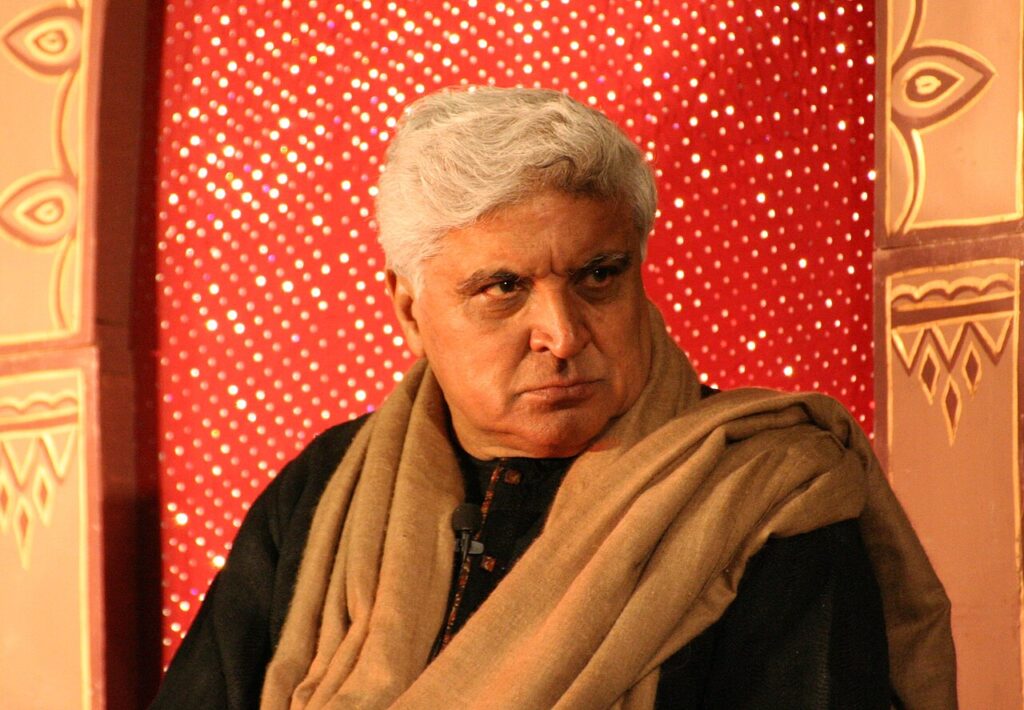
The conversation did not end with Kabir Singh. Sandeep Reddy Vanga’s Animal (2023), starring Ranbir Kapoor, became a major box office hit and also faced criticism for its treatment of women. In January 2024, lyricist Javed Akhtar publicly called the success of such films dangerous, and Vanga responded, as reported by NDTV and Indian Express.
At the same time, films like Thappad (2020), which treats a single slap as a reason to leave a marriage, and Kiran Rao’s Laapataa Ladies (2024), India’s official Oscar entry, pushed back against the same ideas these dialogues celebrate. Laapataa Ladies streams on Netflix, while Animal also streams on Netflix and Kabir Singh on Amazon Prime Video and JioHotstar.
For more discussion on Hindi films, see our Bollywood and listicles sections.
Frequently asked questions
Which is the most criticised sexist dialogue in Bollywood?
Lines from Kabir Singh and Grand Masti have drawn some of the strongest criticism, along with Dabangg’s slap line and Jab We Met’s “khuli tijori” remark.
Who says “Akeli ladki khuli tijori ki tarah hoti hai”?
The station master at Ratlam says it to Geet (Kareena Kapoor) in Jab We Met (2007).
Why was Animal criticised?
Critics and some film personalities, including Javed Akhtar, objected to its portrayal of masculinity and its treatment of women, even as the film was a major commercial hit.
Which Bollywood films challenge sexism?
Thappad (2020), Pink (2016), and Laapataa Ladies (2024) are among the mainstream films that question patriarchy directly.
Sources: Wikipedia: Jab We Met, Wikipedia: Animal (2023 film), JustWatch India: Kabir Singh.
Also Read: Top 10 Highest-Grossing Hindi Films of 2025 With Box Office